Showing posts with label Glazes. Show all posts

Sunday, October 30, 2016

Drip Tests


These 4 pictures show a test I did in a glaze firing.  I made 2 pots, bisqued them and applied a glaze after waxing the bottoms and top rims. They were fired in the position of the pot on the right, showing dried glaze flakes in 3 colors, intended to melt during the firing.
This one worked fine,  Looks like I held the kiln temp. for about the right amount of time for the glaze to run down all the way.  Notice the little bumps of glaze on the drip ring, where they solidified when the heat was lowered.

This one had a problem: some of the holes in the drip ring were too close to the edge of the pot, and glaze had glued it to the pot.  So this picture shows how I set it up to refire, expecting the drip ring to drop onto the round clay slab, as the glaze re-melted.  

It worked!  the drip ring dropped down. However, the glazes now ran the opposite way, and too far- past the foot of the pot. I want to keep them, however, so will make some kind of a base for the pot. Meanwhile, this glass ashtray supports the pot as a temporary base.


Wednesday, October 21, 2015

Catching up....


10" high, eucalyptus seed imprints
I haven't posted on this blog for a long time, so have uploaded a bunch of pictures of pots made during this past year. Will not bother dating them. The two above are about 6" in diameter.

Some bowls I made for a charity event- "Empty Bowls project"

This looks yellow here, but it's a soft peach color. 10" high

Have to keep this one; it has a hairline short crack on the inside bottom. Oranges look good in it anyway.

Two views of a handbuilt vase with a thrown top portion. I have this cool textured rubber mat, and used it on a slab, for the cylinder. I left al the "marks of making" this time. 12" high


I call this "Travelers" (had to call it something, to be in a judged show) because the oval shapes reminded me of cars going along a rough road.  
6 celdon cups made to order for a friend
Our new house numbers

- an order: this was not so easy to make!

The body of the pot is about 7" across. The bright color is from an encapsulated stain.

...about 5" across

Garlic jar made for one of my daughters, per her request.

10" in diameter

Add ca

4 pots for succulents


These eggs and small pots are only bisqued

an experiment with "lunch meat jerky" Some were tasty, some not so much.


Friday, August 26, 2011

Here is a quickie image of how I use the glazing tools pictured earlier in this post. (Pretend there is glaze in the metal pan). I dip the bowl into the glaze and turn until it's all the way around, then quickly scoop some glaze to cover the inside bottom, and pour it out. Then hold the bowl upside down for a minute and blot

Pictured below are my glazing tools, in 3 sizes. These tools are useful if I am glazing a piece that I want to rotate around in a pan of glaze. One of my hands is on the waxed bottom of the plate or bowl, and the other inside, on top of one these things, which leave only 3 small marks, instead of finger marks in the wet glaze. The "CD" tool is pictured upside down so you can see the bolts I used. The red tool is actually one I designed first, and my husband made it for me, welding the parts together. The wooden ball is attached to a short piece of dowel, and rotates nicely in the tube, as you turn the pot. I think I got it from a sewing supply store-in the purse-making craft section.


Wednesday, August 24, 2005


Rutile wash over high iron glaze This vase was glazed with what I am calling "Bad Touchtone" (the batch prior to the latest one) and I purposely gave it just a quick dip, and got a very deep brown/black. Just what I wanted, as a base for this rutile, titanium, and GB wash (recipe from Clayart) which generally adds life wherever you put it, and would, I knew from previous tests, do a sort of nutmeg almost crystal looking effect with slow cooling. The marks are made with a slice of hickory nut.


Touchtone Red Glaze, ^6 to 7, oxidation

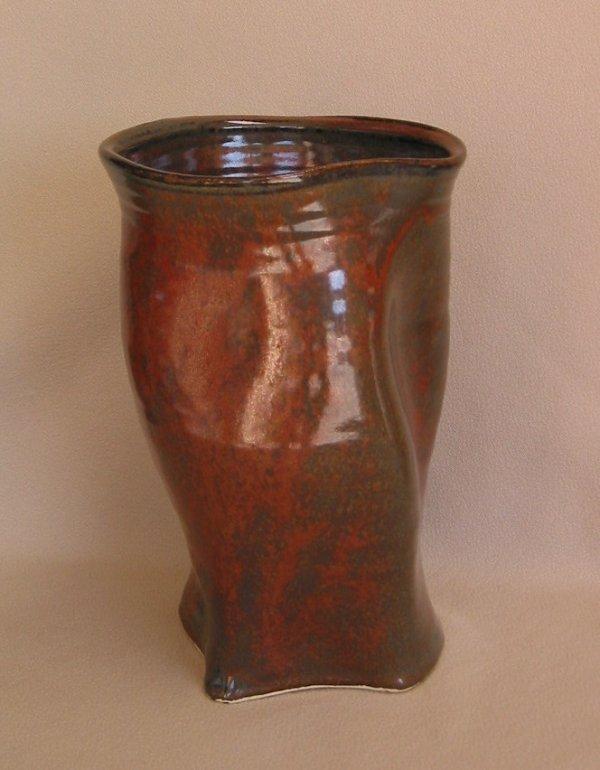
I started using this glaze a few years ago (got it from Rebecca Varner in a Clayart mug exchange) and have loved it for the excitement it gave to opening the kiln. ..never quite sure what to expect. Where thinly applied it is often a deep navy color. There is often a varying amount of sort of an olive color and whoopee! look at all that red, lovely iron red. This vase, which I call "Red Dancer" has the kind of result I hope for from this glaze. It is of white stoneware.

When I ran out of this glaze a while ago, I mixed up a new
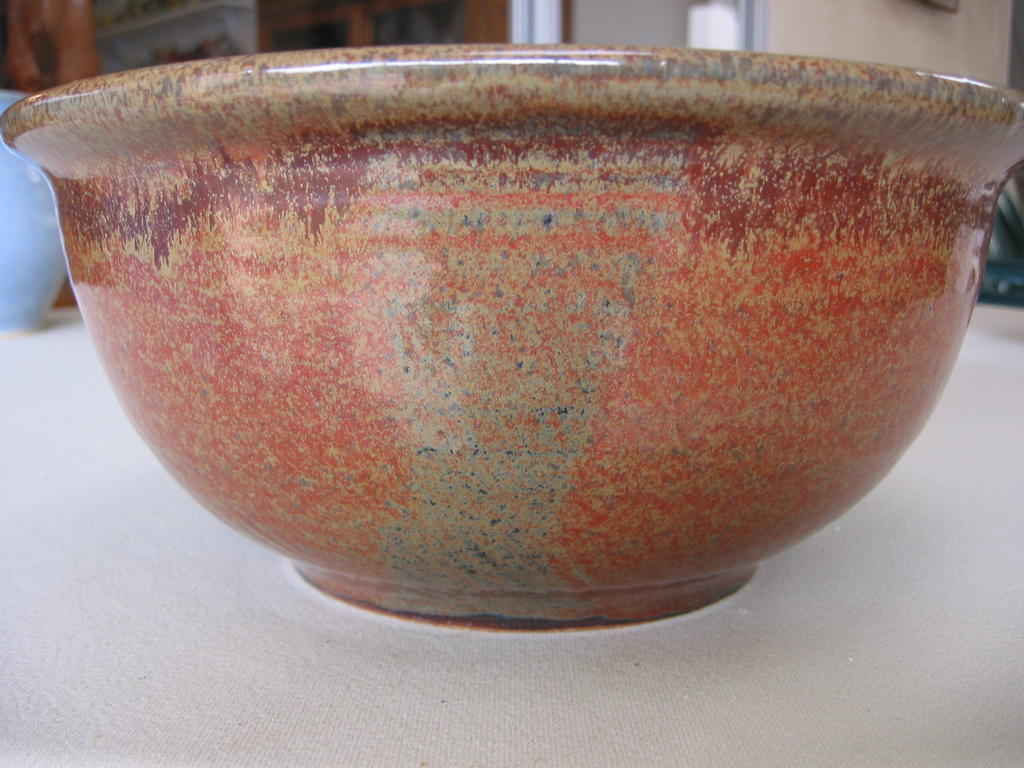
batch, and was very disappointed; there was a lot of the olive, but not a nice olive, some sort-of black, and some brownish red, or faintly reddish brown. I didn't even take any pictures- all the pieces were designated to be re-dipped and refired. I remembered that I had used some red iron oxide from a different source, and thought that might be the problem. I also checked my firing logs to make sure I didn't go hotter or cool down faster. That was all about the same.

So, last week I mixed a new batch (half recipe, actually) and fired over the weekend. The result: better, but different, sort of spotty- maybe I need to strain it a few more times.
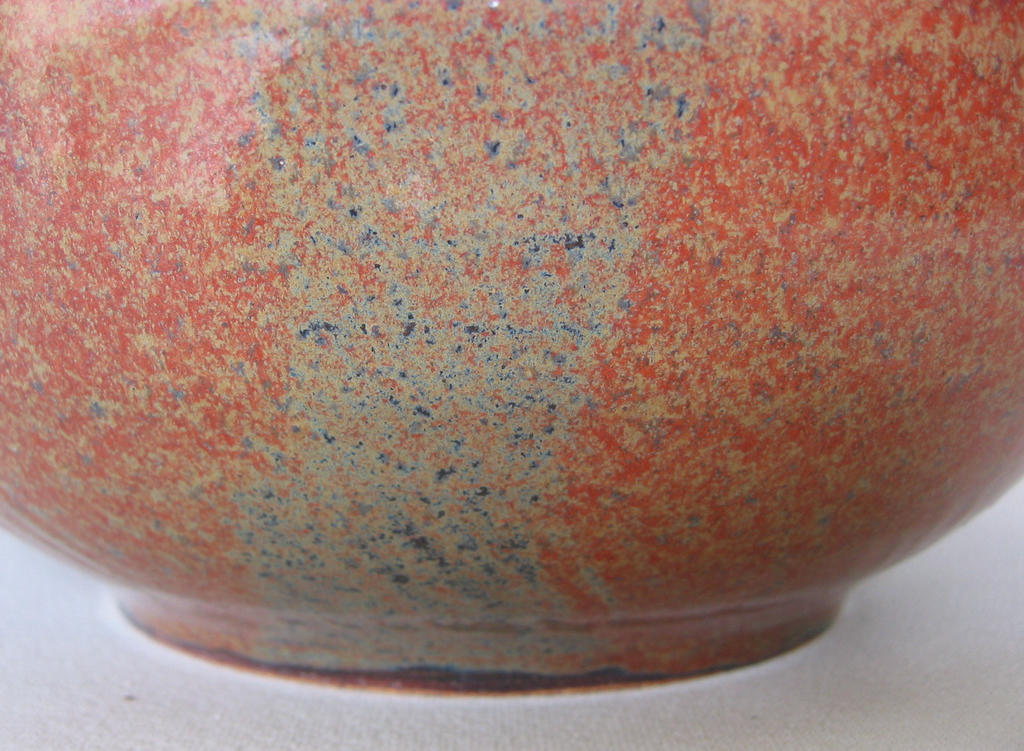
You can see my liner glaze was fluid enough on the rim to carry down the stripe I did just under the rim. The stripe was half RIO, half rutile. Anyway there is some decent red here, as well as pale olive. I actually don't mind the blotchy look, at least on this piece. I took a macro of the area where the glaze is thinner- you can really see the color change. This bowl is a buff stoneware, by the way.


I swear there is no cobalt in this glaze. I rolled the bowl around in the glaze pan and didn't quite go all the way, so here's the area of thinner glaze.

The recipe is in the Clayart archives, I'm sure, but here it is anyway:

TOUCHTONE RED, cone 6/7, oxidation
15 minute soak, slowed cooling

Gerstley Borate 31
Flint 30
Feldspar 20 (I used Kingman)
Talc 14
EPK 5

Add Red Iron Oxide 15